Sunday, July 28, 2013

Richard Wolff: Detroit a "Spectacular Failure" of System that Redistributes Pay from Bottom to Top

image

http://www.democracynow.org/2013/7/25/richard_wolff_detroit_a_spectacular_failure

From the site:

Kicking off a series of speeches about the economy, President Obama told a crowd in Illinois on Wednesday that reversing growing inequality and rejuvenating the middle class "has to be Washington’s highest priority." During his remarks, Obama failed to mention the bankruptcy filing by Detroit, where thousands of public workers are now fighting to protect their pensions and medical benefits as the city threatens massive cuts to overcome an estimated $18 billion in debt. Detroit’s bankruptcy "is an example of a failed economic system," says economist Richard Wolff, professor emeritus of economics at University of Massachusetts. "There are so many other cities in Detroit’s situation, that if the courts decide that it is legal to take away the pension that has been promised to and paid for by these workers, you have [legalized] theft. It is class war, redistributing income from the bottom to the top."

The Great Gerrymander of 2012

image

http://www.nytimes.com/2013/02/03/opinion/sunday/the-great-gerrymander-of-2012.html?pagewanted=all

From the site:

HAVING the first modern democracy comes with bugs. Normally we would expect more seats in Congress to go to the political party that receives more votes, but the last election confounded expectations. Democrats received 1.4 million more votes for the House of Representatives, yet Republicans won control of the House by a 234 to 201 margin. This is only the second such reversal since World War II.

Saturday, July 27, 2013

North Carolina Passes the Country's Worst Voter Suppression Law

image

http://www.thenation.com/blogs/ari-berman#

From the site:

I’ve been in Texas this week researching the history of the Voting Rights Act at the LBJ Library. As I’ve been studying how the landmark civil rights law transformed American democracy, I’ve also been closely following how Republicans in North Carolina—parts of which were originally covered by the VRA in 1965—have made a mockery of the law and its prohibition on voting discrimination.

Late last night, the North Carolina legislature passed the country’s worst voter suppression law after only three days of debate. Rick Hasen of Election Law Blog called it “the most sweeping anti-voter law in at least decades” The bill mandates strict voter ID to cast a ballot (no student IDs, no public employee IDs, etc.), even though 318,000 registered voters lack the narrow forms of acceptable ID according to the state’s own numbers and there have been no recorded prosecutions of voter impersonation in the past decade. The bill cuts the number of early voting days by a week, even though 56 percent of North Carolinians voted early in 2012. The bill eliminates same-day voter registration during the early voting period, even though 96,000 people used it during the general election in 2012 and states that have adopted the convenient reform have the highest voter turnout in the country. African-Americans are 23 percent of registered voters in the state, but made up 28 percent of early voters in 2012, 33 percent of those who used same-day registration and 34 percent of those without state-issued ID.

With Voting Rights Act in Shambles, North Carolina Kicks Voter Suppression Into High Gear

image

http://truth-out.org/news/item/17780-with-voting-rights-act-in-shambles-north-carolina-kicks-voter-suppression-into-high-gear

From the site:

North Carolina Republicans have introduced a major overhaul of the state's election system, adding dozens of amendments to a voter ID bill that will authorize voter vigilantes, end election day registration, cut early voting, make it harder to register, and even create loony protections against "zombie voters."

Sunday, July 14, 2013

Bernie Sanders says Walmart heirs own more wealth than bottom 40 percent of Americans

image

http://www.politifact.com/truth-o-meter/statements/2012/jul/31/bernie-s/sanders-says-walmart-heirs-own-more-wealth-bottom-/

From the site:

Sanders tweeted that "the Walton family of Walmart own more wealth than the bottom 40 percent of America."

The statistic correctly compares the combined net worth of the bottom 41.5 percent of American families with the six Walton family members. We think the additional points -- that many people with a negative net worth are not necessarily poor and that percentages about wealth distribution can be deceiving -- are important and interesting. Nevertheless, Sanders’ claim is solid. We rate it True.

New Study: The Wealthy are more Unethical

image

http://www.economicpopulist.org/content/new-study-wealthy-are-more-unethical

From the site:

Economics correspondent Paul Solman reports on other new research from the University of California, Berkeley collaborating this, and the impact of wealth on people’s behavior in a new 10-minute video from PBS (posted at YouTube)

This might help explain why some people like Wal-Mart's Christy Walton can rake in $1.2 million a day in unearned income with stock dividends, while at the same time, refusing to pay her employees a living wage in earned hourly income --- costing the taxpayers $6,000 per employee in government entitlements (aka "wage subsidies"). It seems that some of these people just can't help themselves...they're mentally ill!

Tuesday, July 9, 2013

You can’t deny global warming after seeing this graph

image

http://www.washingtonpost.com/blogs/wonkblog/wp/2013/07/09/you-cant-deny-global-warming-after-seeing-this-graph/?wpisrc=nl_wnkpm

From the site:

Nine of the 10 warmest years on record have occurred since 1998. But forget individual years. That data is noisy. A single year can see its temperatures rocket for reasons having little to do with climate change.

Sunday, June 30, 2013

Great Newsletter

Great newsletter – everyone should read and subscribe:

image

http://www.toomuchonline.org/tmweekly.html

Debating the Rise of the Top 1 Percent

image

http://www.epi.org/blog/debating-rise-top-1-percent-incomes/

From the site:

Our argument (shocker) is that the rise of the top 1 percent of incomes is not simply the result of a competitive, well-functioning market rewarding skills and capital to the precise degree necessary to elicit their supply. Instead, lots of the rise in top 1 percent of incomes is about the creation and/or redistribution of economic rents.

Wednesday, June 19, 2013

Effect of Unemployment and Policy on SNAP Enrollment in the Great Recession


image

http://jaredbernsteinblog.com/wp-content/uploads/2013/06/snaprolls_1.png

Lynn Parramore: Meet America’s Most Shameless Defender of the 1 Percent, Harvard Economist Greg Mankiw

image

http://www.nakedcapitalism.com/2013/06/lynn-parramore-meet-americas-most-shameless-defender-of-the-1-percent-harvard-economist-greg-mankiw.html

From the site:

Readers were duly exercised about a paper published by Greg Mankiw which had to go through so many hoops to promote the idea that inequality was the result of merit as to be worthy of our Frederic Mishkin Iceland Prize for Intellectual Integrity.

Suffice it to say further ridicule of Mankiw is in order, and Parramore provides a useful contribution.

Saturday, June 15, 2013

Inside Obama’s Victory

image

http://www.people-press.org/2012/11/07/changing-face-of-america-helps-assure-obama-victory/

Manufacturing: Employment Falls to Record Lows, But Productivity Soars

image

image

http://seekingalpha.com/article/179648-manufacturing-employment-falls-to-record-lows-but-productivity-soars

From the site:

Here’s some pretty grim news about U.S. manufacturing -- employment in that sector fell below 12 million this year for the first time since 1946, and is now at the lowest level (11,648,000 manufacturing jobs in November) since March of 1941 (see chart, BLS data here). Since the onset of the recession in December 2007, manufacturing employment fell for 24 consecutive months, as the U.S. economy shed an average of 89,000 manufacturing jobs each month for the last two years.

From the peak manufacturing employment of 19.55 million jobs in 1979, the American manufacturing workforce has shrunk by more than 40%, as almost 8 million manufacturing jobs have been eliminated over the last thirty years, with almost 6 million of those losses taking place just since 2000. And there’s nothing to suggest that the trend won’t continue, so we can expect a continued contraction of U.S. manufacturing employment

But what about manufacturing output? That news is a little better. The chart below shows the decline in manufacturing employment plotted against the Gross Value of Final Products and Nonindustrial Supplies (in billions of constant 2000 dollars), as calculated by the Federal Reserve (data here). In the thirty year period between 1977 and 2007, U.S. manufacturing output doubled from $1.5 trillion to $3 trillion, before dropping to a ten-year low in June 2008 of $2.6 trillion, from the contractionary effects of the recession. Manufacturing output has been rebounding lately and it increased in four out of the last five months, after falling in ten out of the previous 11 months, signalling that the economy moved from recession to expansion in the middle of the year.

Gini Coefficient

image

http://www.businessinsider.com/chart-of-the-day-income-inequality-in-the-us-china-france-brazil-2011-10

From the site:

For those that don't know, the GIni Coefficient is a crude way of measuring inequality (You can see the math behind it here). The basic idea is that on a scale of 0-100, 0 would represent a country where everyone had identical amounts of money, and 100 would represent a world in which just one person had all the money and everyone else had nothing.

Sunday, May 19, 2013

Charts: Shocking Stats on College Costs

image

http://www.motherjones.com/contributor/2011/09/student-debt-charts

The Political Imbalance Facing Unions in America

image

http://jaredbernsteinblog.com/the-political-imbalance-facing-unions-in-america/

From the site:

But allow me to add this, learned from my many years as a DC wonk in that rarified space where economics, politics, and power intersect.  The problem unions face in Washington can be summarized thusly: the Republicans dislike them a lot more than the Democrats like them.

Sunday, May 12, 2013

Politics in Black and White

image

http://www.nytimes.com/2007/09/24/opinion/24krugman.html?_r=0

Very prescient Paul Krugman op-ed from 2007 – predicts the 2012 election results.

From the site:

But to get the Republican nomination, a candidate must appeal to the base — and the base consists, in large part, of Southern whites who carry over to immigrants the same racial attitudes that brought them into the Republican fold to begin with. As a result, you have the spectacle of Rudy Giuliani and Mitt Romney, pragmatists on immigration issues when they actually had to govern in diverse states, trying to reinvent themselves as defenders of Fortress America.

And both Hispanics and Asians, another growing force in the electorate, are getting the message. Last year they voted overwhelmingly Democratic, by 69 percent and 62 percent respectively.

In other words, it looks as if the Republican Party is about to start paying a price for its history of exploiting racial antagonism. If that happens, it will be deeply ironic. But it will also be poetic justice.

Author Of Heritage Immigration Study Resigns Amid Racism Scandal

image

http://thinkprogress.org/immigration/2013/05/10/1997231/richwine-resigns-heritage/

From the site:

Jason Richwine, a coauthor of the Heritage Foundation’s report on the cost of the current immigration bill, has resigned after it emerged that his graduate dissertation on immigration was premised on the idea that Latinos were less intelligent than whites.

A familiar economic foe

image

http://maddowblog.msnbc.com/_news/2013/05/09/18149430-a-familiar-economic-foe?lite

From the site:

There's no shortage of issues Americans would like to see elected policymakers address, but Gallup this week found that job creation and economic growth remain the public's top priority -- by a sizable margin.

With that in mind, President Obama will appear in Austin in just a couple of hours, placing renewed emphasis on his economic agenda and hoping to pressure Congress to focus on the issue that's been largely forgotten among many lawmakers: the fragile economic recovery.

Saturday, May 11, 2013

World Happiness Report

image

http://www.earth.columbia.edu/sitefiles/file/Sachs%20Writing/2012/World%20Happiness%20Report.pdf

The Facts on SNAP, Part 3: SNAP Is Efficient

image

http://www.offthechartsblog.org/the-facts-on-snap-part-3-snap-is-efficient/

From the site:

  • SNAP has one of the most rigorous quality control systems of any public benefit program. Each year, states pull a representative sample of cases (totaling about 50,000 nationally) and review their decisions on which applicants received benefits and how much.  Federal officials then double-check a subsample of the cases.  States face federal financial sanctions if they don’t lower high error rates.

The Facts on SNAP, Part 2: SNAP Supports Work

image

http://www.offthechartsblog.org/the-facts-on-snap-part-2-snap-supports-work/

From the site:

About two-thirds of SNAP recipients aren’t expected to work, mostly because they are children, elderly, or disabled.  But, among SNAP households with at least one working-age, non-disabled adult, 58 percent work while receiving SNAP — and 82 percent work in the year before or after receiving SNAP.

Friday, May 10, 2013

Rios Montt found guilty of genocide

lafronteratimes: "I know that President Rios Montt is a man of great personal integrity and commitment" R Reagan, 1983. Rios Montt found guilty of genocide

Original Tweet: http://twitter.com/lafronteratimes/status/332997746267136000

Sent via TweetDeck (www.tweetdeck.com)

Wednesday, May 8, 2013

JAMA Forum: ACA Implementation Starts to Get Real | news@JAMA

http://newsatjama.jama.com/2013/05/08/jama-forum-aca-implementation-starts-to-get-real/

The Facts on SNAP

With the Senate and House Agriculture Committees considering changes next week to SNAP (the Supplemental Nutrition Assistance Program, formerly food stamps), we are beginning a series of posts today that will lay out basic facts about the nation's most important anti-hunger program.  This first one starts with the people it serves.

http://www.offthechartsblog.org/the-facts-on-snap-part-1-snap-provides-modest-benefits-to-vulnerable-people/

Friday, April 26, 2013

Reinhart-Rogoff Shoot Back...with a popgun

econjared: Reinhart & Rogoff shoot back…with a popgun: http://t.co/HFGdGz1yGY

Original Tweet: http://twitter.com/econjared/status/327833211424092161

Sent via TweetDeck (www.tweetdeck.com)

Twilight of the Middle Class

Reuters: .@cafreeland asks: are we seeing the twilight of the American middle class? http://t.co/Czi6Taj0LF

Original Tweet: http://twitter.com/Reuters/status/327854100819607553

Sent via TweetDeck (www.tweetdeck.com)

The 1 Percent's Solution

NYTimeskrugman: OP-ED COLUMNIST; The 1 Percent's Solution http://t.co/veIqxXx9gR

Original Tweet: http://twitter.com/NYTimeskrugman/status/327611711987277824

Sent via TweetDeck (www.tweetdeck.com)

Thursday, April 25, 2013

West, Texas

NicholsUprising: President Obama in #WestTX: "America needs towns like West. That's what makes America great." So, so true. @thenation @WeGotEd @edshow

Original Tweet: http://twitter.com/NicholsUprising/status/327531322316836864

Sent via TweetDeck (www.tweetdeck.com)

Business Travelers Must Not Be Inconvenienced!

LOLGOP: AMERICA WILL NOT LET BUSINESS TRAVELERS LANGUISH FOR HOURS! That's for cancer patients and disabled vets and immobile seniors.

Original Tweet: http://twitter.com/LOLGOP/status/327587126092894208

Sent via TweetDeck (www.tweetdeck.com)

This Chart Should Be Blown Up and Draped Over the Bush Library

LOLGOP: This is the chart that should be blown up and draped over the Bush Library. http://t.co/xWVISUMRcN
Original Tweet: http://twitter.com/LOLGOP/status/327591956085633025
Sent via TweetDeck (www.tweetdeck.com)

Saturday, April 20, 2013

Meet The Two Most Dangerous Economists In The World Right Now

image

http://www.businessinsider.com/reinhart-and-rogoff-dangerous-debt-ceiling-2011-8

From the site:

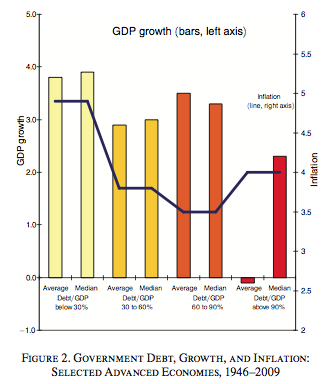
And though nobody takes the "confidence fairy" argument very seriously, pro-cutting politicians are armed with some intellectual heft: Frequently during the debate we heard politicians cite the work of economists Carmen Reinhart (University of Maryland) and Ken Rogoff (Harvard), who have argued over the last couple of years that higher public debts contribute to lower GDP growth. And, conveniently, they've made a big deal over this idea that a 90% debt-to-GDP ratio represents some kind of tipping point, over which growth slows fast. Their ideas are outlined in the book This Time It's Different, which has been a huge hit.

What the Reinhart & Rogoff Debacle Really Shows: Verifying Empirical Results Needs to be Routine

image

http://themonkeycage.org/2013/04/19/what-the-reinhart-rogoff-debacle-really-shows-verifying-empirical-results-needs-to-be-routine/

From the site:

There’s been an enormous amount of buzz since a study was released this week questioning the methodology in a published paper. The paper under fire is Reinhart and Rogoff’s “Growth in a Time of Debt” and the firing is being done by Herndon, Ash, and Pollin in their article “Does High Public Debt Consistently Stifle Economic Growth? A Critique of Reinhart and Rogoff.” Herndon, Ash, and Pollin claim to have found “spreadsheet errors, omission of available data, weighting, and transcription” in the original research which, when corrected, significantly reduce the magnitude of the original findings. These corrections were possible because of openness in economics, and this openness needs to be extended to make all computational publications reproducible.

More Bad Excel

Screen shot 2013-04-18 at 3.53.18 PM

http://baselinescenario.com/2013/04/18/more-bad-excel/

From the site:

Now the macroeconomic world has its version of the death penalty debate, in the famous paper by Carmen Reinhart and Ken Rogoff, “Growth in a Time of Debt.” Thomas Herndon, Michael Ash, and Robert Pollin released a paper earlier this week in which they tried to replicate Reinhart and Rogoff. They found two spreadsheet errors, a questionable choice about excluding data, and a dubious weighting methodology, which together undermine Reinhart and Rogoff’s most widely-cited claim: that national debt levels above 90 percent of GDP tend to reduce economic growth.

Sunday, April 14, 2013

REPORT: Partisanship And Diversity On The Sunday Shows In 9 Charts

image

http://mediamatters.org/research/2013/04/05/report-partisanship-and-diversity-on-the-sunday/193482

From the site:

Each Network Hosted More Guests From The Right Than The Left. Republicans and conservatives outpaced Democrats and progressives on all four networks. Fox News Sunday had the largest discrepancy, with 53 percent of guests being Republicans or conservatives and only 24 percent being Democrats or progressives.

Monday, March 25, 2013

The Facts About Disability Insurance

image

http://www.offthechartsblog.org/the-facts-about-disability-insurance/

From the site:

National Public Radio (NPR) is running a series of stories about the Social Security Disability Insurance (DI) program.  Its first was extremely unbalanced and repeated some of the oft-claimed myths about DI.  Here’s the truth.

DI provides modest but vital benefits to workers who become unable to perform substantial work due to a serious medical impairment, as I testified last week before a House subcommittee.

Most of the recent rise in DI’s rolls stems from demographic factors:  the aging of the baby boom generation, the growth in women’s employment, and Social Security’s rising retirement age.  In fact, when you adjust for these factors, the program has grown only modestly (see chart).  Other factors — including the economic downturn — also have contributed to the program’s growth, but its costs and caseloads are generally in line with past projections.

The Brave and Serious Mr. Ryan

image

http://www.theatlantic.com/politics/archive/2011/04/the-brave-and-serious-mr-ryan/237008/

From the site:

I mentioned earlier that if asked to choose an adjective to describe the budget plan presented by Rep. Paul Ryan, I would suggest "partisan" or "gimmicky," as opposed to "serious" or "brave." Most budget proposals are both partisan and gimmicky, so this is no particular knock against Rep. Ryan. But it's worth mentioning because so much of the pundit-sphere (excluding the Atlantic's Derek Thompson) has received the plan as a dramatic step forward in clear thinking about our fiscal future.

Tuesday, February 26, 2013

Max Planck and the Macro Wars

image

http://goo.gl/kN8Bm

Paul Krugman mentioned the Max Planck quote (see below) in a recent column. Matthew Yglesias makes generally the same point here:

Richard Tsukamasa Green rightly notes that Thomas Kuhn would not be surprised by the fact that the Great Recession has barely changed anyone's minds about anything. Instead, as Scott Sumner (at the end) and Paul Krugman both in different ways imply if the intellectual climate changes for the better it will be because it changes what subjects and methods young people think are interesting.

"Truth never triumphs—its opponents just die out," said Max Planck, "science advances one funeral at a time."

That's one of those quotes where I'm not sure the famous guy to whom it's attributed ever actually said it. But it correctly captures the contours of change. Ideas that are at the margins in one cohort may become mainstream in the next because they seem more appealing or fruitful or relevant. But already established figures very rarely change their views about anything that's important to them. Instead they apply their intelligence to rationalizing their own desire to not switch views. And since we're normally not interested in the opinions of stupid people, we find that smart people are very good at applying reason to the task of rationalization.

Saturday, February 23, 2013

Thom Hartmann Explains Why US Public Debt Is Inconsequential


Thom Hartmann Expalins Why US Public Debt is Inconsequential

Monday, February 18, 2013

Are the Republicans Beyond Saving?

image

http://www.nybooks.com/blogs/nyrblog/2013/feb/11/are-republicans-beyond-saving/

From the site:

The spectacle of the Republicans, like teenagers longing to be invited to the prom, floundering about in search of more popularity with American voters, would be comical if it didn’t present the sad picture of a once great and proud party—the party of Lincoln and Eisenhower—working its way into near irrelevance. The Republican Party is having its own form of PTSD. According to one of the most respected party elders the Republicans firmly believed that the voters would reject Barack Obama for a second term and deliver the Senate back into their hands. Wishful thinking combined with erroneous polling assumptions left them totally unprepared for the thumping loss they sustained and they are still in something of a state of shock. “They’re still close in time to that event,” the party elder said. “You need to keep that in mind. Right now they’re groping around in a dark room.”

Thursday, February 14, 2013

Full text: Obama's 2013 State of the Union address

image

http://www.cbsnews.com/8301-250_162-57569084/full-text-obamas-2013-state-of-the-union-address/

From the site:

Mr. Speaker, Mr. Vice President, Members of Congress, fellow citizens:

Fifty-one years ago, John F. Kennedy declared to this Chamber that "the Constitution makes us not rivals for power but partners for progress...It is my task," he said, "to report the State of the Union - to improve it is the task of us all."

America's Misguided Approach to Social Welfare

image

http://www.foreignaffairs.com/articles/138483/kimberly-j-morgan/americas-misguided-approach-to-social-welfare?page=show

From the site:

Debates about the proper role and size of government dominated the 2012 U.S. presidential election. President Barack Obama; his Republican rival, Mitt Romney; and their surrogates relentlessly sparred over who should pay what taxes, who should get what benefits, and how Washington should manage major sectors of life, such as health care and education. What neither side made clear was how the United States stacks up against other developed countries. As other countries embraced big government and generous social policies in the middle of the twentieth century, the common wisdom goes, the United States sought a relatively small welfare state. And for partisans on both sides of the aisle, one of the key issues up for grabs on November 6 was whether such American exceptionalism would persist or fade away.

Original Sin Why the GOP is and will continue to be the party of white people

Original Sin  New Republic - Mozilla Firefox_2013-02-14_14-27-30

http://www.newrepublic.com/article/112365/why-republicans-are-party-white-people

From the site:

With Barack Obama sworn in for a second term—the first president in either party since Ronald Reagan to be elected twice with popular majorities—the GOP is in jeopardy, the gravest since 1964, of ceasing to be a national party. The civil rights pageantry of the inauguration—Abraham Lincoln's Bible and Martin Luther King's, Justice Sonia Sotomayor's swearing in of Joe Biden, Beyoncé's slinky glamor, the verses read by the gay Cuban poet Richard Blanco—seemed not just an assertion of Democratic solidarity, but also a reminder of the GOP's ever-narrowing identity and of how long it has been in the making.

Sunday, February 10, 2013

Campaign dinner address of Franklin Delano Roosevelt (the Fala speech)

image

http://www.wyzant.com/Help/History/HPOL/FDR/Fala/

Audio file of FDR’s ‘Fala’ speech – some things never change – here’s a quote:

The opposition in this year has already imported into this campaign a very interesting thing, because it is foreign. They have imported the propaganda technique invented by the dictators abroad. Remember, a number of years ago, there was a book, Mein Kampf, written by Hitler himself. The technique was all set out in Hitler's book - and it was copied by the aggressors of Italy and Japan. According to that technique, you should never use a small falsehood; always a big one, for its very fantastic nature would make it more credible - if only you keep repeating it over and over and over again.

Well, let us take some simple illustrations that come to mind. For example, although I rubbed my eyes when I read it, we have been told that it was not a Republican depression, but a Democratic depression from which this Nation was saved in 1933 - that this Administration this one today - is responsible for all the suffering and misery that the history books and the American people have always thought had been brought about during the twelve ill-fated years when the Republican party was in power.

The world is spending more time mired in banking crises

image

http://tv.msnbc.com/2013/02/03/the-world-is-spending-more-time-mired-in-banking-crises/

From the site:

That’s good news, but it’s not enough to get us back to full employment any time soon. Even if we add an average of 208,000 jobs per month, we won’t get back to pre-recession levels of employment until August 2020, according to The Hamilton Project. That finding depends in part on estimates of how many new people will enter the workforce, but it’s largely consistent with the findings of a new paper from the Bank of England that investigates the long-run effects of banking crises.

As the authors of that paper found, banking crises are fundamentally different from other kinds of economic crises, like debt crises and currency crises. Banking crises tend to produce both a short-term drag on productivity and, also, a long-term drag on growth. As Peter Orszag, the former director of the Office of Management and Budget, wrote this week:

For each year of a financial crisis, the level of gross domestic product per capita is reduced in the long term by 1.5 percentage points. In other words, a crisis lasting five years permanently lowers GDP per capita by a whopping 7.5 percentage points.

So banking crises are incredibly destructive for the economy broadly, as well as for human capital and even for our political institutions, as economist Joseph Stiglitz has noted. And not only do banking crises restrain growth in the long term, they also produce vastly inequitable distributional effects. In the first year of the recovery, for example, the top 1% of earners recovered 90% of the income gains. Corporate profits have soared to a high of 10% of GDP, while employee compensation has fallen to a low of 43.5%.

Sunday, February 3, 2013

How Republicans Plan To Rig The Next Presidential Election, In Six Pictures

image

http://thinkprogress.org/justice/2013/01/24/1488491/how-the-republicans-plan-to-rig-the-next-presidential-race-in-six-pictures/

From the site:

Yesterday, Virginia Republicans took the first step to move a GOP plan to rig the Electoral College forward in that state. Similar plans are under consideration in Pennsylvania, Wisconsin, and Michigan.

The Republican election rigging plan targets blue states that President Obama won in 2008 and 2012, and changes the way they allocate electoral votes to give many of these votes away for free to the Republican candidate for president. Under the Republican Plan, most electoral votes will be allocated to the winner of individual Congressional districts, rather than to the winner of the state as a whole. Because the Republican Plan would be implemented in states that are heavily gerrymandered to favor Republicans, the resulting maps would all but guarantee that the Republican would win a majority of each state’s electoral votes, even if the Democratic candidate wins the state as a whole.

Saturday, January 26, 2013

Eugene C. Patterson, Editor and Civil Rights Crusader, Dies at 89

image

http://www.nytimes.com/2013/01/14/us/eugene-c-patterson-editor-and-civil-rights-crusader-dies-at-89.html?pagewanted=all&_r=0

From the site:

Mr. Patterson succeeded the celebrated Ralph McGill as editor of The Constitution, and from 1960 to 1968 was a voice of conscience and progressive politics on the editorial page. He wrote thousands of columns, many of which addressed white Southerners directly, like letters from home, and cumulatively painted a portrait of the South during the civil rights struggle.

Raised on Georgia farm and serving as a tank commander in World War II, he worked at small-town newspapers in Texas and Georgia as a young man, and although he moved up to wire service jobs in New York and London, he had been steeped in the droll wit and down-home sociability of the South.

There were no simple solutions to the racial problems, and he offered none. Instead, he drew poignant scenes of suffering and loss to condemn violence and miscarriages of justice. And he explored themes of courage and questions of responsibility that went beyond mindless acts of racism to challenge a people with traditions of decency.

At the ruins of the 16th Street Baptist Church in Birmingham, Ala., where a bomb killed four girls on Sept. 15, 1963, he crafted his most famous column, “A Flower for the Graves.” Walter Cronkite was so moved that he asked Mr. Patterson to read it on the “CBS Evening News.”

Profits of World's 100 Wealthiest Could End Poverty Four Times Over: Report

image

http://www.commondreams.org/headline/2013/01/21-0

From the site:

The profits of the world's one hundred most wealthy individuals last year would be enough to wipe out world poverty, says a new report. And not just once over, or twice over, but the vast amount of money that has flowed to the top of the world's financial food chain would be enough to eradicate the worst kind of poverty a full four times over.

Friday, January 11, 2013

On debt reduction, U.S. is nearly finished

image

http://maddowblog.msnbc.com/_news/2013/01/11/16463952-on-debt-reduction-us-is-nearly-finished?lite

From the site:

I've been known to publish a few charts and graphs on the debt from time to time, but this latest gem from the Center on Budget and Policy Priorities is especially important.

We talked earlier this week about a policy detail much of the political establishment chooses to overlook: the fact that policymakers have already adopted a series of measures that will sharply reduce the national debt. Indeed, just since the start of fiscal year 2011, President Obama has signed $2.4 trillion of debt reduction into law. If one includes the projected savings from the Affordable Care Act, that total is even higher.

For the right, which ironically was responsible for creating a fiscal mess during the Bush/Cheney era but which now inexplicably claims the high ground, the progress isn't good enough. We need more austerity, conservatives argue, to address the "debt crisis."

Tuesday, January 1, 2013

A Freaky Clip From 1990 Shows How Nothing Ever Changes In Washington Budget Fights


From Joe Wiesenthal / Business Insider – the more things change the more things stay the same:

http://www.businessinsider.com/1990-budget-negotiations-perfectly-echo-the-fiscal-cliff-2012-12

“You must watch this clip from 1990, where Senators debate a "balanced" budget package designed to reduce the deficit.

You have Sen. Alan Simpson talking about how there are no real cuts to Medicare, but rather a mere slowing of the growth from 11% to 10%, and that the media was being irresponsible by calling it cuts.

There's Alaska Senator Ted Stevens warning about the danger if Washington hit the "sequester."

You have Senator Pete Domenici talking about how it was a "balanced" approach because only 30% of the deficit reduction came from "revenue" (even than Republicans didn't use the word taxes). Domenici went on to say how reducing the deficit would create jobs. In the beginning you have Sentor Robert Byrd talking about how dangerous it was to leave children with a huge deficit mess if the Senate didn't act.

And meanwhile, the whole time, you have them praising each other and the other courageous centrists who didn't appease the extremes of their parties.

It's actually freaky.”

Link to clip referenced on the site:

http://www.c-spanvideo.org/clip/4249391

2012: The Year in Graphs

image

http://www.washingtonpost.com/blogs/wonkblog/wp/2012/12/27/2012-the-year-in-graphs/

Great graphs from Ezra Klein’s Wonkblog:

“As 2012 draws to a close, Wonkblog asked our favorite professional wonks — economists, political scientist, politicians and more — to see what graphs and charts they felt did the best job explaining the past year. Here are their nominees.”

Graph from North Dakota senator Kent Conrad:

image

“This chart demonstrates that additional revenue has to be part of any deficit reduction package. It shows that the last five times the budget was in surplus (in 1969, 1998, 1999, 2000 and 2001), revenue was near 20 percent of GDP. Revenue is now at 15.8 percent of GDP, near its lowest level in 60 years. And under the House Republican budget plan, revenue would reach only 18.7 percent of GDP by 2022, a clearly inadequate level. Even with spending cuts and entitlement changes, given the retirement of the baby boom generation and rising health costs, it is clear we are also going to need more revenue.”

“Source: Data comes from OMB historical tables and the House Republican budget proposal.”

The Economics of the Civil War

image

http://eh.net/encyclopedia/article/ransom.civil.war.us

Excellent article from Roger Ransom published on EH.net web site:

“The Civil War has been something of an enigma for scholars studying American history. During the first half of the twentieth century, historians viewed the war as a major turning point in American economic history. Charles Beard labeled it "Second American Revolution," claiming that "at bottom the so-called Civil War - was a social war, ending in the unquestioned establishment of a new power in the government, making vast changes - in the course of industrial development, and in the constitution inherited from the Fathers" (Beard and Beard 1927: 53). By the time of the Second World War, Louis Hacker could sum up Beard's position by simply stating that the war's "striking achievement was the triumph of industrial capitalism" (Hacker 1940: 373). The "Beard-Hacker Thesis" had become the most widely accepted interpretation of the economic impact of the Civil War. Harold Faulkner devoted two chapters to a discussion of the causes and consequences of the war in his 1943 textbook American Economic History (which was then in its fifth edition), claiming that "its effects upon our industrial, financial, and commercial history were profound" (1943: 340).”

Policy Implications of Capital-Biased Technology: Opening Remarks

image

http://krugman.blogs.nytimes.com/2012/12/28/policy-implications-of-capital-biased-technology-opening-remarks/

“OK, maybe that was too quick. Let me take it more slowly: a substantial part of our social insurance system — Social Security and the hospital insurance portion of Medicare — is funded through dedicated payroll taxes. If payrolls lag behind overall national income, this will tend to leave those programs underfunded given the way the laws are currently written.

But America as a whole won’t have gotten poorer: the money is still there to support the programs, it’s just coming in the form of capital rather than labor income. There would be no problem, at least in economic terms, in continuing the programs by adding revenue from general taxation, maybe even from dedicated taxes on capital income.

And consider the alternative, in which we slash Social Security and Medicare not because the nation can’t afford those programs, but merely because workers are taking a smaller share of national income. What we would be doing in that case is doubling down on the damage to workers — they’re already hurting because income is shifting away from labor, and we’re going to hurt them even more by cutting the benefits they depend upon.”

Factory Jobs Gain, but Wages Retreat

image

http://www.nytimes.com/2011/12/30/business/us-manufacturing-gains-jobs-as-wages-retreat.html?pagewanted=all&_r=0

Wages for new hires in the manufacturing sector are dropping – this is an unfortunate result of the outsourcing of jobs – particularly during the last decade.

image

Source for above data:

http://seekingalpha.com/article/215042-increased-productivity-has-destroyed-millions-of-jobs-and-that-s-good

George Will: You Know Who Else Had High Voter Turnout?

image

http://mediamatters.org/blog/2012/12/20/george-will-you-know-who-else-had-high-voter-tu/191926

This article discusses a really despicable George Will column – I’m sure this is an extremely unsettling proposition for conservatives:

“George Will argues in his Washington Post column today that what he terms the Justice Department's "drive to federalize voter registration" is an unnecessarily complex answer to "the non-problem of people choosing not to vote," and that high voter turnout isn't all it's cracked up to be, citing the German elections of the early 1930s that resulted in Nazi dictatorship.”

Fixing the economy, a new focus for Congress

image

http://www.washingtonpost.com/opinions/katrina-vanden-heuvel-fixing-the-economy-a-new-focus-for-congress/2012/12/31/f4e206ae-5364-11e2-bf3e-76c0a789346f_story.html

Largely missing is any discussion of how to fix the economy, to make it work for working people once more. Just sustaining the faltering recovery won’t get it done. We’re still struggling with mass unemployment, declining wages and worsening inequality. Corporate profits now capture an all-time record percentage of the economy; workers’ wages have hit an all-time low. A little constriction, or a lot, won’t do anything to change that reality.

Brewing Up Confusion

image

http://www.nytimes.com/2012/12/31/opinion/krugman-brewing-up-confusion.html?_r=0

Howard Schultz, the C.E.O. of Starbucks, has a reputation as a good guy, a man who supports worthy causes. And he presumably thought he would add to that reputation when he posted an open letter urging his employees to promote fiscal bipartisanship by writing “Come together” on coffee cups.

In reality, however, all he did was make himself part of the problem. And his letter was actually a very good illustration of the forces that created the current mess.